


Off-Duty Police vs Armed Security Guards: What's the Difference and Which Does Your Tulsa Property Need?
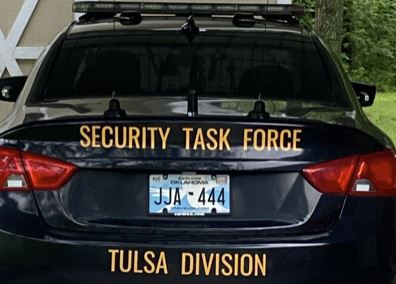
By James Dodson • Tulsa Security Task Force • May 2026
Off-duty police officers and armed security guards both carry firearms on patrol, both wear uniforms, and both deter incidents on Tulsa-area properties. The critical difference is arrest authority. An off-duty police officer working a private security assignment retains full lawful arrest authority within their commission's jurisdiction. A CLEET-licensed armed security guard does not — they can detain under narrow citizen's arrest conditions, but lawful arrest is reserved for sworn officers.
That single distinction changes which one fits a given property. This post explains when off-duty police is the right call, when armed security is the right call, and how to think about the cost difference.
Quick Answer
Off-duty police = sworn officers with full arrest authority. Best for properties facing active threat windows, eviction enforcement, or prior arrest incidents. Armed security guards = CLEET-licensed civilians authorized to carry firearms. Best for visible deterrence, after-hours posts, and routine property patrol. Off-duty police typically costs meaningfully more — roughly double the hourly rate — depending on commission rank and property profile.
The Legal Distinction Most Tulsa Property Managers Miss
A CLEET-licensed armed security guard is, in legal terms, a civilian who has been authorized to carry a firearm on a security assignment. The licensing process involves Phase III firearms certification through the Oklahoma Council on Law Enforcement Education and Training, a psychological evaluation, and live-fire range qualification. CLEET has regulated private security in Oklahoma since 1963.
An off-duty police officer working a private security assignment is something legally different. They are a sworn officer of a law enforcement agency, working a secondary employment role with their department's authorization. Their police commission — the legal authority that makes them an officer — does not switch off when their shift ends. Within their commission's jurisdiction, they retain the power of arrest, the legal protections of qualified immunity for lawful actions, and the obligation to act on certain crimes if they observe them.
The Oklahoma citizen's arrest statute (22 O.S. § 202) allows a civilian to arrest for a public offense committed in their presence or for a felony where the civilian has reasonable cause to believe the suspect committed it. In practice, the conditions are narrow and the legal exposure is real. Most armed security guards are trained to detain and call police, not to arrest.
This is why the choice matters. On a property where the realistic risk profile means an officer is going to encounter an arrestable situation — an active intruder, an assault in progress, a violation of a protective order, an active eviction with a hostile occupant — the legal authority gap between the two options changes outcomes.
Side-by-Side Comparison
Attribute | Armed Security Guard | Off-Duty Police Officer |
Licensing authority | CLEET Phase IV armed license, civilian | Active police commission from a sworn law enforcement agency |
Arrest authority | Citizen's arrest only, narrow conditions, Oklahoma 22 O.S. § 202 | Full lawful arrest authority within commission jurisdiction |
Firearm certification | CLEET Phase III firearms course, range qualification, psychological evaluation | Department-issued duty weapon, agency training standards, annual qualification |
Court testimony weight | Civilian witness | Sworn officer testimony, agency documentation |
Uniform and vehicle | Company uniform, marked patrol vehicle | Department uniform when authorized, marked or unmarked vehicle depending on agency policy |
Hourly cost (Tulsa metro) | Lower hourly rate, varies by armed/unarmed and hours required | Meaningfully higher hourly rate, typically in the range of double, depending on commission rank and property profile |
Best fit | Visible deterrence, after-hours posts, access control, property patrol | Active threat windows, properties with prior arrest incidents, evictions, hostile turnover, event security with crowd-control risk |
When Off-Duty Police Is the Right Call
Off-duty police service fits properties where the realistic incident pattern includes situations that require lawful arrest authority. A handful of property types in the Tulsa metro consistently warrant this level of coverage.
Properties with a documented arrest history
If a multifamily property has accumulated police calls for trespass, weapons offenses, or drug activity over the past 12-24 months, off-duty officers in the after-hours window change outcomes. Trespass becomes an arrest, not a request to leave. The pattern that was driving incidents starts to break.
Eviction enforcement and hostile turnover
Contested evictions, ownership-dispute properties, and hostile lease terminations carry real risk of confrontation. An off-duty officer present during the writ-of-assistance window has the authority to arrest on the spot if the situation escalates. A civilian armed guard does not.
Event security with crowd-control risk
Concerts, festivals, and high-attendance corporate events that draw alcohol-related incidents, fights, or DUI-related parking-lot confrontations benefit from sworn presence. Off-duty officers also coordinate more naturally with on-duty patrol response when a situation requires escalation.
Hospitality and retail with confrontation patterns
Hotels, bars, and retail anchors that have built up a documented confrontation pattern often need to combine visible deterrence with the authority to act. Off-duty officers fill both roles. The visible commission identification also affects how confrontational individuals respond on first contact.
When Armed Security Guards Are the Right Call
Armed security guards fit properties where the work is deterrence, observation, documentation, and routine response — not active arrest scenarios. Most Tulsa-area commercial properties land in this category, and the cost difference is meaningful when the threat profile doesn't require sworn authority.
After-hours posts on commercial properties
Office parks, industrial yards, distribution centers, and warehouse complexes through the 10 PM to 6 AM window benefit from CLEET-licensed armed presence. The work is observation, patrol, access control, and credible deterrence. Arrest authority is rarely the deciding factor.
Multifamily without an arrest pattern
Apartment communities, condominium complexes, and HOA properties that need visible security through evening hours — but don't have a documented police-call history — are well-served by armed guards. The licensing standard for CLEET Phase IV armed officers in Oklahoma is rigorous, and the cost is appropriate for the role.
Retail closing windows and parking-lot escort
Shopping centers and standalone retail locations needing presence during closing hours, customer escorts to vehicles, and lot patrol generally don't need arrest authority. They need a visible, trained officer who can de-escalate a confrontation and call police if needed.
Construction sites and project security
Active construction projects with equipment, materials, and copper exposure overnight benefit from armed patrol. The risk is theft and trespass, both of which armed guards are well-suited to deter and document.
The Cost Question, Answered Honestly
Off-duty police service costs meaningfully more than armed security — typically in the range of double the hourly rate, depending on the officer's commission rank, the property's risk profile, and the hours required. The cost differential reflects what's actually different: active commission, agency-trained de-escalation, lawful arrest authority, court-admissible sworn-officer documentation, and the regulatory/insurance layer that sits behind each off-duty assignment.
That said, the right comparison isn't off-duty police vs. armed security on price. It's the cost of the right service for the property vs. the cost of the wrong service plus the cost of the incident that the wrong service couldn't handle. A property with an arrest-pattern risk profile that hires armed security to save money usually ends up paying more in incident costs, insurance impact, and tenant turnover within a year.
A planning conversation before the contract reduces the chance of mismatch. Tulsa Security Task Force offers both services. The decision on which one fits a property is made during the initial site walk, not at the pricing call.
How to Decide for Your Tulsa Property
Three questions surface the right answer for most properties:
1. Does the property have a documented arrest pattern in the past 12-24 months?
Police-call history is the strongest signal. If the property has accumulated trespass, weapons, or assault calls, the realistic incident pattern justifies off-duty police authority. If the property has been quiet, armed security is usually appropriate and meaningfully more cost-effective.
2. Is there an active dispute, eviction, or hostile turnover in progress?
Active legal disputes raise the probability of confrontation that requires lawful arrest authority. Off-duty police is the appropriate response for the duration of the dispute, not necessarily afterward.
3. Does the property need 24/7 coverage, or specific risk-window coverage?
Most properties benefit from layered coverage — armed security covering most hours, off-duty police covering identified risk windows. A property doesn't have to choose one or the other for the whole contract. A coordinated provider can run both with one operations desk and reconciled reporting.
What's Different About Tulsa Specifically
Two facts about the Tulsa metro affect this decision. First, off-duty police availability varies by department and is generally tightest during high-demand windows — Friday and Saturday nights, large event weekends, and during periods of department staffing pressure. Booking sworn coverage during peak windows requires lead time, often two to four weeks for non-emergency coverage.
Second, the Tulsa metro spans multiple law enforcement jurisdictions. Tulsa Police Department, Tulsa County Sheriff's Office, Broken Arrow PD, Owasso PD, Bixby PD, and Jenks PD all run separate commission authority. An off-duty officer's arrest authority generally tracks the jurisdiction of their primary commission. A coordinated security provider matches the officer's home jurisdiction to the property location, which is one operational detail that matters and that property managers don't usually have to think about.
Frequently Asked Questions
Can off-duty police make arrests while working a private assignment?
Off-duty police officers can make arrests while working private assignments — that's the practical difference from standard armed security. The officer retains lawful arrest authority within their commission's jurisdiction and can exercise it when conditions warrant. Arrests still carry the same agency oversight and procedural rigor as any on-duty arrest.
Is armed security cheaper than off-duty police, and by how much?
Armed security is meaningfully cheaper than off-duty police — typically about half the hourly rate, depending on commission rank, property profile, and hours covered. The difference reflects active police commission, agency training, lawful arrest authority, and sworn-officer testimony weight.
Do I need both services on the same property?
Many Tulsa-area properties benefit from a layered approach: armed security covering routine hours and off-duty police covering identified risk windows. A coordinated provider can run both services through one operations desk, with reporting reconciled across both shifts. This is usually more cost-effective than booking sworn coverage for every hour.
Are off-duty police officers covered by the same insurance as the agency?
Off-duty officers working private security assignments typically operate under their agency's authority but with separate liability coverage held by the private security provider. Tulsa Security Task Force maintains a $1,000,000 per-incident liability policy that has been in effect since the company's founding in 2017, in accordance with Oklahoma law.
How quickly can off-duty police coverage start on a Tulsa property?
Standard off-duty coverage in the Tulsa metro typically requires 24 hours of lead time for non-emergency scheduling, depending on the department, officer availability, and shift pattern requested. Emergency coverage — active dispute, immediate threat — can usually start within 24 hours through pre-vetted officer pools.
Does CLEET regulate both armed security and off-duty police?
CLEET regulates armed and unarmed civilian security guards in Oklahoma — that's the Phase III/IV licensing pipeline. Off-duty police officers are regulated by their employing law enforcement agency, not by CLEET. The two licensing tracks run separately, which is why the legal authority gap exists in the first place.
What to Do Next
If a Tulsa-area property is evaluating security coverage and the question of armed security vs. off-duty police is on the table, the most useful first step is a property walk-through. Tulsa Security Task Force will assess the realistic incident pattern, review any police-call history, and produce a written recommendation for which service fits and which hours benefit from which coverage. There is no obligation and no flat-rate quote sight-unseen.
Tulsa Security Task Force serves the Tulsa metro from two offices:
Harvard Avenue Office • 4752 S Harvard Ave, Tulsa, OK 74135 • (918) 404-5545
Service area: Tulsa, Broken Arrow, Jenks, Bixby
Hartford Avenue Office • 110 S Hartford Ave Suite 2564, Tulsa, OK 74120 • (918) 879-5010
Service area: North Tulsa, Owasso, Collinsville
BBB Accredited A+ rating, continuous since 2018. Veteran Owned Business. Hablamos español.

Comments